
What Dallas Renters Should Know About Landlord and Tenant Pest Responsibilities
By David Dance, Owner, Forterra Pest Control | Serving Dallas, Southlake, and Aubrey, Texas | Commercial Certified Applicator, TPCL #850046
Quick Answer: Texas law puts the repair duty on the landlord only when a pest problem materially affects health or safety and proper notice is given. Dallas adds its own layer: the property owner must eliminate a confirmed infestation using a licensed pest control professional, repair whatever let the pests in, and give tenants 48 hours’ written notice before treatment. Whether a tenant or landlord ultimately pays often comes down to where the infestation started and how well it was documented.
Pest problems in a rental home can turn into a dispute quickly. A tenant finds roaches in the kitchen, mice in a wall, or insects entering through a damaged window. The tenant expects the landlord to fix it. The landlord may argue that the tenant caused the problem. In Dallas, the answer depends on more than the lease because both Texas law and Dallas ordinances can affect who has to act.
This matters in a city with a large rental population. The 2025 Dallas Rental Housing Needs Assessment, released by the Child Poverty Action Lab in February 2026, reported about 304,000 renter households in Dallas. It also found that half of renter households were cost burdened, meaning they spent more than 30% of gross income on housing. Unexpected pest treatment costs can therefore become a serious issue for many households.
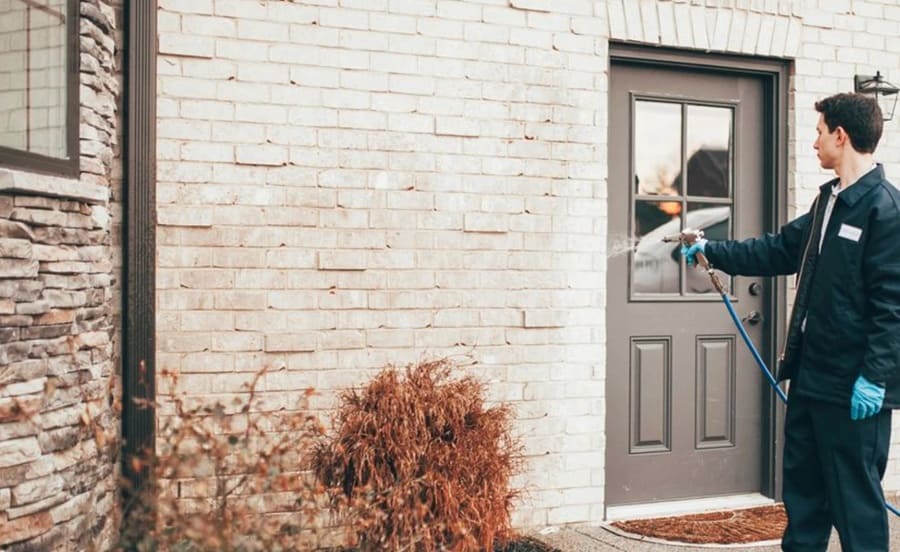
When professional treatment is needed, tenants and property owners may also want to understand what local service is available. Forterra’s Dallas office provides pest control services in the Dallas area and can address common residential pest problems.
What Texas Law Requires From Landlords
Texas does not have a simple rule stating that landlords pay for every pest problem in every rental property. Instead, Texas Property Code § 92.052 requires a landlord to make a diligent effort to repair or remedy a condition that materially affects the physical health or safety of an ordinary tenant when the legal requirements are met.
The tenant generally must notify the landlord of the condition and be current on rent when the required notice is given. The situation also matters. A few ants near an open door may not raise the same issue as a persistent cockroach infestation throughout an apartment or rodents entering through openings in the structure.
Texas law also treats tenant-caused problems differently. A landlord generally does not have the same repair duty when a condition was caused by the tenant, another lawful occupant, a household member, or a guest, unless the issue resulted from normal wear and tear.
Dallas Has Its Own Rules for Infestations
Dallas renters have another layer of protection because the city has specific property standards covering infestations. Under Chapter 27 of the Dallas City Code, when evidence of an infestation exists, the property owner must eliminate it using a person licensed under the Texas Structural Pest Control Act. The owner must also repair conditions that contribute to the infestation.
That second requirement is important. Pest treatment alone may not solve a problem if rodents are entering through damaged exterior openings or insects keep getting inside because of unrepaired building conditions.
A Reentry Point Behind the Dryer Vent
This is where the repair requirement often decides whether an infestation actually goes away. In one recent case, a Forterra technician was called to a duplex near White Rock Lake for a recurring mouse problem. The unit had been treated twice by another company, but mice kept returning within a few weeks each time. On inspection, the technician found a gap where the dryer vent line met the exterior wall, wide enough for a mouse to pass through. The visit addressed the existing rodents, but the crew also documented the gap in writing and flagged it to the property manager, since sealing an exterior wall opening falls outside the scope of a pest treatment. Once the opening was closed, the calls stopped. Situations like this are a common reason an infestation returns even when a tenant follows every step correctly — the pests get treated, but the entry point never gets fixed.
For rental property, Dallas also requires the owner to provide tenants with written notice at least 48 hours before taking steps to eliminate an infestation, under Section 27-11(i) of the Dallas City Code. The notice must state the treatment method. A tenant can waive that 48-hour period in writing.
| Dallas rental fact | Current figure or rule |
| Renter households | About 304,000 |
| Low-income renter households at or below 80% AMI | 59% |
| Cost-burdened renter households | 50% |
| Pest treatment notice required by Dallas | At least 48 hours, in writing |
| Professional treatment under Dallas infestation rule | Licensed pest professional (TSPCA) |
When Can the Tenant Be Responsible
Tenants also have responsibilities. Dallas rules require occupants to keep their dwelling free from accumulated solid waste and other conditions that can encourage an infestation. Food left exposed for long periods, overflowing garbage, or other sanitation problems can complicate a claim that the property owner alone caused the pest problem.
The source of the infestation matters. A widespread problem affecting several apartments may point toward a building-level issue. An infestation tied directly to a tenant’s conduct or belongings may produce a different result. Bed bugs can be particularly difficult because determining where an infestation started is not always straightforward.
This is why tenants and landlords should document what they find rather than immediately assuming who must pay.
What Renters Should Do After Finding Pests
A renter who discovers a serious pest problem should report it promptly and keep records. Photos of insects, droppings, nesting material, damaged walls, gaps around pipes, or other signs can help show what was happening and when it started. Written communication is also easier to document than a conversation in a hallway or an informal phone call.
The Office of the Texas Attorney General advises tenants dealing with health and safety repairs to provide proper notice and keep copies. Texas Property Code § 92.056 creates a rebuttable presumption that seven days is a reasonable repair period, although the actual time can depend on the severity of the condition and the availability of labor and materials.
| Step | Why it matters |
| Photograph the problem | Creates a dated record of the infestation or property defect |
| Review the lease | Shows any pest-related terms agreed to by the parties |
| Notify the landlord in writing | Creates evidence that the owner knew about the problem |
| Save messages and notices | Helps establish the timeline |
| Provide reasonable access | Allows inspection and professional treatment |
| Follow treatment instructions | Reduces the risk of pests surviving or spreading |
Renters elsewhere in North Texas may face similar questions even though local ordinances can differ. Resources that list local pest control options in Plano, for example, can help residents compare providers when professional treatment is needed.
Why Serious Pest Problems Can Become Health Issues
Some infestations are more than an inconvenience. The Centers for Disease Control and Prevention states that rodents can carry diseases that spread through contact with droppings, urine, saliva, bites, or contaminated materials. The Environmental Protection Agency also identifies cockroach droppings, body parts, and certain proteins in their saliva and feces as possible asthma or allergy triggers.
Those health concerns help explain why significant pest problems can fall within laws dealing with conditions that affect a tenant’s health or safety. Still, the facts matter. The type of pest, size of the infestation, condition of the building, and response from both parties can all affect how a dispute is handled.
When a Pest Dispute May Require Legal Help
A simple pest complaint does not automatically become a legal case. The situation becomes more serious when a landlord repeatedly ignores written notices, an infestation continues because structural problems are not repaired, treatment charges are disputed, or the parties disagree about who caused the problem.
Tenants should be cautious about withholding rent or paying for treatment and automatically deducting the cost. Texas law has specific procedures and conditions for tenant remedies. Acting outside those rules can create another dispute even when the original complaint was legitimate.
For most Dallas renters, the best first steps are straightforward: document the infestation, notify the landlord, review the lease, allow proper treatment, and keep records of what happens next. If the problem involves serious health risks, substantial property damage, retaliation, or an unresolved dispute over legal responsibility, speaking with a Texas landlord-tenant attorney can help clarify the available options.
Authorities & Sources
Texas Property Code § 92.052 — Landlord’s Duty to Repair or Remedy
Texas Property Code § 92.056 — Landlord Liability and Tenant Remedies; Notice and Time for Repair
Texas Occupations Code Ch. 1951 — Texas Structural Pest Control Act
Texas Attorney General — Renters’ Rights
CDC — Rodent Control and Disease
EPA — Asthma Triggers: Gain Control (Cockroaches and Other Pests)