
Cosmetic Laser Treatment Safety: What to Know About Consent, Risks, and Provider Qualifications
Cosmetic laser procedures are now widely available in dermatology offices, plastic surgery practices, and medical spas. That availability can make them feel routine. They are not risk-free. Lasers deliver concentrated light energy to tissue, and the device, wavelength, treatment depth, settings, skin characteristics, and the person’s experience can all affect the outcome.
For patients, safety begins before the laser is turned on. A useful consultation should explain what is being treated, why a particular device or approach is being recommended, what improvement is realistic, what recovery may look like, what alternatives exist, and which complications are possible. It should also make clear who will perform the treatment and what supervision is available if a problem occurs.
The American Society of Plastic Surgeons reported 3,703,305 skin-resurfacing procedures in the United States in 2024. That category included procedures such as dermabrasion, chemical peels, microdermabrasion, and ablative and nonablative laser treatments. This number does not mean every resurfacing procedure involved a laser, but it shows how common skin-resurfacing treatments have become.
Informed Consent Is a Process, Not Just a Form
A signed consent form documents a decision, but it should not be the entire consent process. The American Medical Association’s informed-consent guidance describes informed consent as communication that allows a patient to understand the nature and purpose of a proposed intervention, its expected benefits and burdens, relevant risks, alternatives, and the option of declining treatment.
For cosmetic laser treatment, that discussion should be specific to the procedure being offered. A patient considering fractional resurfacing for acne scars, sun damage, pigmentation, or texture changes should understand why the proposed technology is being chosen for that concern and for that patient’s skin. The conversation should cover the likely degree of improvement, the possible need for multiple sessions, expected downtime, common short-term effects, less-common but important complications, and reasonable alternatives.
If a patient is researching Fraxel laser treatment, for example, the useful question is not simply whether the device is popular. It is whether that treatment is appropriate for the patient’s diagnosis, skin type, goals, tolerance for downtime, and risk profile.
Ask Who Will Actually Perform the Procedure
Patients often focus on the brand name of a laser and spend less time asking who will operate it. That question matters because training, licensure, supervision, and permitted scope of practice can differ by provider type and by state.
A 2025 Journal of Cosmetic Dermatology study compared practice patterns among fellowship-trained laser dermatology practices, plastic surgery practices, and medical spas. In the practices surveyed, physicians performed laser procedures in 60% of dermatology offices, 33% of plastic surgery offices, and 9% of medical spas. Laser technicians performed procedures in 3%, 35%, and 56% of those settings, respectively.
Those figures describe the surveyed practices; they do not prove that every physician-performed procedure is safe or that every nonphysician-performed procedure is unsafe. The practical takeaway is narrower: patients should know who will treat them, what that person’s training and experience are, whether the person is licensed or otherwise permitted to perform the procedure under applicable state law, and what level of medical supervision is available.
Useful questions include:
- Who will perform the treatment?
- What professional license, certification, or laser-specific training does that person have?
- How often does that person use this device for patients with my skin type and concern?
- Will a physician or other qualified clinician be on site?
- Who evaluates and treats a burn, infection, eye injury, or pigment change if a complication occurs?
The Laser Type and Settings Affect Both Results and Risk
“Laser treatment” is not one procedure. Different devices use different wavelengths and delivery methods. Ablative lasers remove or vaporize portions of the skin surface and may reach deeper tissue. Nonablative lasers generally deliver energy beneath an intact surface. Fractional systems create microscopic treatment zones while leaving surrounding tissue untreated.
Even within the same device family, treatment can vary by energy, density, pulse duration, number of passes, treatment depth, spot size, cooling, and other settings. Those choices may be adjusted for the condition being treated, the body area, skin tone, recent sun exposure, prior procedures, and the balance between desired improvement and acceptable downtime.
The same 2025 study reported that 98% of the surveyed dermatology and plastic surgery practices customized laser combinations or settings, compared with 63% of surveyed medical spas. This is observational practice-pattern data, not proof that customization alone prevents complications. Still, it supports a commonsense safety question: how is the treatment plan being tailored to the individual patient?
Understand the Risks That Apply to Your Treatment
The U.S. Food and Drug Administration notes that laser surgery can involve risks such as pain, infection, scarring, incomplete treatment, bleeding, and changes in skin color. The exact risk profile depends on the procedure, device, treatment intensity, treatment site, and patient factors.
For cosmetic skin resurfacing, patients may also be counseled about temporary redness, swelling, tenderness, peeling, crusting, or sensitivity. More significant complications can include burns, persistent redness, infection, scarring, or unwanted darkening or lightening of the skin. Some people are more prone to post-inflammatory hyperpigmentation or other pigment changes, so skin tone and a history of pigment problems should be part of the pre-treatment discussion.
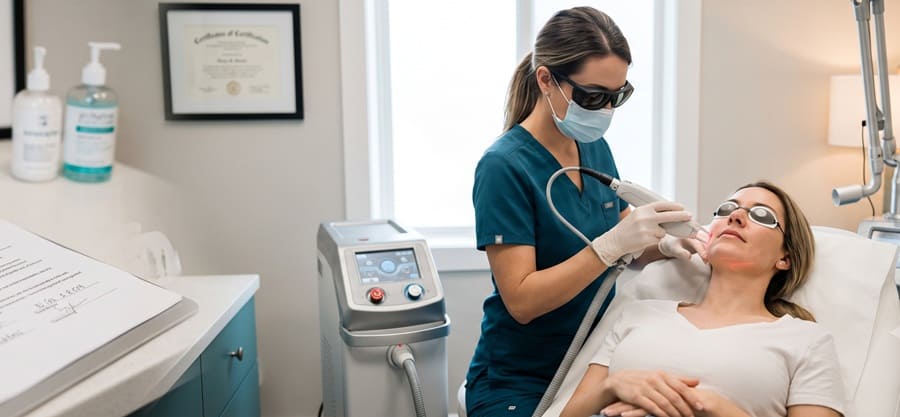
Laser energy can also injure the eyes. Appropriate wavelength-specific eye protection and careful treatment technique are therefore important whenever the eyes may be exposed.
FDA laser-safety information explains that laser light can be concentrated intensely and that direct eye exposure can cause retinal injury. Patients should be told what eye protection will be used and whether additional precautions are needed for treatment near the eyes.
Your Medical History Can Change the Plan
A cosmetic consultation should include enough medical history to identify factors that could increase risk or alter timing. Depending on the procedure, a clinician may ask about medications, active skin infections or rashes, a history of cold sores, poor wound healing or abnormal scarring, prior resurfacing procedures, recent tanning or sun exposure, pregnancy status when relevant, and conditions or treatments that affect healing or photosensitivity.
Patients should give complete information rather than deciding on their own that a medication or condition is unimportant. The clinician can then determine whether the procedure should proceed as planned, be modified, or be postponed.
Skin Tone Deserves Specific Attention
Laser treatment can be performed safely across a wide range of skin tones, but the margin for error and the risk of pigment change may differ depending on the device, settings, indication, and patient. A consultation should address whether the provider has experience treating patients with a similar skin tone and how the plan is designed to reduce the risk of hyperpigmentation, hypopigmentation, burns, or scarring.
This is one reason generic “one-size-fits-all” treatment descriptions are not very useful. A patient needs information about the proposed procedure as it applies to that patient.
Questions to Ask Before You Agree to Treatment
- What is the exact name of the laser or energy-based device you plan to use?
- Why is this device appropriate for my concern and skin type?
- Who will perform the procedure, and what are that person’s qualifications?
- How often have you treated patients with a similar skin tone and condition?
- What results are realistic, and how many sessions may be needed?
- What are the most common side effects? What are the serious but less common risks?
- What is the expected downtime, and what should I avoid during recovery?
- What alternatives should I consider, including doing nothing?
- What eye protection or other safety measures will be used?
- What symptoms after treatment should prompt an urgent call or medical evaluation?
- Who will manage a complication if one occurs?
Know the Difference Between Marketing Claims and Medical Information
Before-and-after photographs, testimonials, package pricing, and device branding can help patients understand what a practice offers, but they are not substitutes for individualized medical advice. Photos may not show the full range of outcomes, and another patient’s result does not predict yours.
Patients comparing practices can use directories or local listings to identify possible clinicians, but credentials and scope of practice should be verified through reliable professional or state licensing sources before treatment.
For example, someone looking for dermatologists serving Flushing patients can use a directory as a starting point, then verify the clinician’s license, specialty training, and experience independently.
A Good Consent Process Should Leave You Better Informed
A patient should not leave a laser consultation knowing only the price and the name of the device. A useful informed-consent process should make the expected benefits, limitations, risks, alternatives, recovery, provider qualifications, and follow-up plan clear enough for the patient to make a voluntary decision.
The safest starting point is straightforward: know what treatment is being proposed, understand why it is being recommended for you, find out who will perform it, discuss the risks that are relevant to your skin and medical history, and know what to do if recovery does not go as expected.
Medical and Legal Disclaimer
This article is for general educational information and is not a substitute for individualized medical advice, diagnosis, treatment, or legal advice. Risks, licensing rules, delegation requirements, and supervision standards for cosmetic laser procedures can vary by state and by provider type. Patients should consult an appropriately qualified healthcare professional and, when relevant, verify professional licensing or scope-of-practice requirements through the applicable state authority.