
How Cooking Oil is Recycled?
Cooking oil is a commonly used item in the food preparation process, both in home kitchens and commercial and industrial kitchens. There really is not a kitchen out there that will not use cooking oil in some part of food preparation, whether food is being cooked for customers or just a few friends that are over for dinner. But once cooking oil has been used for cooking, the question remains of what happens to it once it is disposed of properly.
Proper disposal of used cooking oil typically involves handing it off to a company like Green Mountain Products that offers cooking oil recycling services instead of trying to dispose of it down the drain or by dumping it outside. Proper disposal helps to ensure that you and your home or business are reducing your environmental impact, keeping in line with local regulations, and preventing blockages in your pipes.
A company like Green Mountain Products will come to your location and collect any used cooking oil you have produced and take it back to their facility for handling and recycling. But how does cooking oil get recycled?
Below, we answer the question of how cooking oil is recycled and how waste cooking oil can be reused.
How Does Cooking Oil Get Recycled?
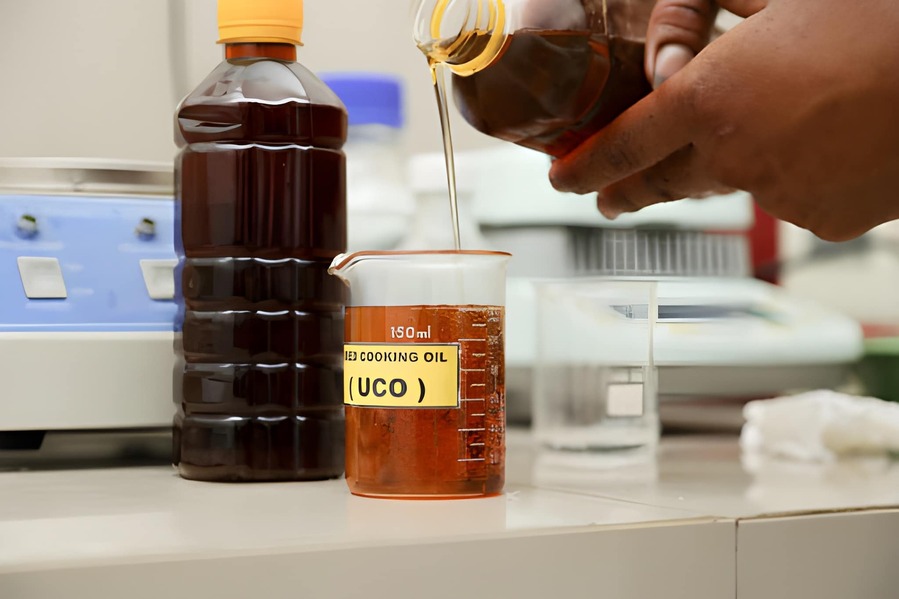
Once used cooking oil is collected from a residential, commercial, or industrial kitchen, the oil will be brought to a facility for proper processing and recycling. Typically, the recycling process involves filtering, which helps to remove unwanted sediment, food scraps, particles, and more. Other things like water and even meat juice can potentially make it into cooking oil as well, so all of that needs to be filtered out through strainers as well.
Following filtration, another process called transesterification happens. Transesterification is a chemical process that is used to produce biodiesel from different renewable sources like vegetable oils and used cooking oil. Used cooking oil is then converted into a mix of biodiesel and glycerin. Biodiesel and glycerin can then be separated from each other, with both being able to be used for other purposes such as biodiesel fuel.
The recycling of used cooking oil, especially into biodiesel fuel and animal feed, helps to divert waste from both sewer pipes and landfills.
What is the Best Method to Recycle Cooking Oil?
Generally speaking, the best method to recycle cooking oil is to work with a company that offers cooking oil recycling services. This will ensure that large amounts of used cooking oil are handled by a professional team and transported, filtered, and recycled correctly.
Here at Green Mountain Products, we have an experienced team and the facilities required to properly handle the recycling of used cooking oil from start to finish. Our services are high-quality and are offered 24 hours a day, 7 days a week.
How Can Waste Cooking Oil be Reused?
The Environmental Protection Agency (EPA) notes that about 3 billion gallons of waste cooking oil is generated in the United States per year. That is a lot of used cooking oil to contend with, especially for businesses that regularly produce large amounts of cooking oil in their kitchens. But this is really where companies that offer cooking oil recycling services come in.
Through their used cooking oil collection and recycling services, companies like Green Mountain Products are essentially giving a second life to waste cooking oil. So, how can waste cooking oil be reused?
Some of the most common ways that recycled cooking oil can be reused include:
- Biodiesel fuel
- Animal feed
- Other fuel sources
- Natural pesticides and insect repellant
- Skin moisturizer
- Hair conditioner
- Soap making
- Lubrication
- Composting
These are just a few ways that waste cooking oil can be reused once it has been properly recycled.
Connect with Green Mountain Products for Cooking Oil Recycling Services
Now that you know how cooking oil is recycled and some of the uses it can have once it’s been recycled, be sure to reach out to us here at Green Mountain Products. We are a 4th generation owned and operated family business that serves customers in the Ohio, West Virginia, Kentucky, and Indiana regions.